Why Healthy Communities Are the Foundation of Healthy Institutions
Organisations across the world invest significant time and resources in promoting workplace wellness. Policies are developed, leadership programmes are introduced, and training sessions focus on professionalism, ethical behaviour, and respectful engagement among employees.
The objective is clear: to create workplaces that are healthy, productive, and conducive to collaboration.
However, an important reality is often overlooked.
Workplaces do not exist in isolation from society. The people who enter organisations every day come from homes, families, and communities that shape their beliefs, behaviours, emotional responses, and interpersonal skills.
If an individual grows up in a dysfunctional home environment and later enters a toxic workplace, expecting that individual to naturally demonstrate behaviours that foster a healthy organisational culture may be unrealistic. In such circumstances, organisational wellness becomes difficult to achieve because the social foundations influencing behaviour remain unaddressed.
This reality highlights the importance of community wellness.
Understanding Community Wellness
Community wellness refers to the collective social, emotional, psychological, and physical wellbeing of people within a community. It reflects the conditions that enable individuals and families to live healthy, safe, and fulfilling lives.
The World Health Organization (WHO) defines health as:
“a state of complete physical, mental and social well-being and not merely the absence of disease.” (World Health Organization, 1948)
This definition recognises that wellbeing extends far beyond medical treatment and is deeply influenced by social environments.
Communities shape how individuals learn to:
- communicate with others
- manage conflict
- express emotions
- respond to authority and leadership
- cope with trauma and adversity
These behavioural patterns often follow individuals into schools, workplaces, and public institutions.
Behaviour Is Often Learned at Home
During a recent discussion on gender relations and conflict, a participant made an observation that reflects a widely recognised psychological principle: many people act out behaviours they were exposed to in their homes.
In some households:
- anger is expressed through aggression
- silence becomes a coping mechanism
- fear prevents open communication
- conflict is never resolved constructively
As a result, individuals who grow up in such environments may carry these behavioural patterns into adulthood.
When conflict arises in workplaces or public settings, some individuals may react aggressively, while others may withdraw and struggle to express themselves.
Psychological research supports this observation. Social Learning Theory explains that individuals often learn behaviours through observing and imitating others, particularly within family environments (Bandura, 1977).
What may appear to be unprofessional behaviour in the workplace may therefore reflect deeper social conditioning developed over many years.
The Missing Link Between Communities and Organisations
Many institutions attempt to promote organisational wellness through initiatives such as:
- employee wellness programmes
- leadership development
- conflict resolution training
- workplace mental health support
While these initiatives are valuable, they often focus on addressing the symptoms of deeper social challenges.
Without attention to community wellness, organisations are left attempting to correct behavioural patterns that were formed long before individuals entered the workplace.
Research on the social determinants of health shows that wellbeing is strongly influenced by the conditions in which people are born, grow, live, work, and age (World Health Organization, 2008). These conditions include family stability, economic opportunities, education, and social support systems.
In the South African context, these challenges are particularly important due to historical inequalities, social fragmentation, and economic disparities that continue to influence community wellbeing.
The South African Context
South Africa has long recognised the importance of social wellbeing in building a healthy society.
The National Development Plan (NDP) 2030 emphasises the need to build strong families, cohesive communities, and ethical leadership to support national development (National Planning Commission, 2012).
Similarly, the Department of Social Development’s White Paper for Social Welfare highlights the importance of community-based support systems, social cohesion, and collective responsibility in addressing social challenges (Department of Social Development, 1997).
Research on community wellbeing in South Africa also points to the importance of social capital, defined as the networks, trust, and relationships that enable communities to function effectively (Putnam, 2000).
When communities experience high levels of trauma, inequality, or social fragmentation, the effects are often reflected in schools, workplaces, and institutions.
Rebuilding Communities That Care
If societies are serious about improving organisational cultures, greater attention must be given to strengthening the wellbeing of communities.
Communities that promote empathy, dialogue, support, and healing are more likely to produce individuals who are emotionally resilient and capable of engaging constructively in workplaces and institutions.
Community wellness involves creating spaces where people can:
- speak openly about their experiences and emotional pain
- address trauma and difficult life experiences
- learn healthy communication and conflict management
- support one another in rebuilding dignity and trust
When communities become environments of healing rather than silence, the positive impact extends into schools, workplaces, and governance institutions.
Building Community Wellness Ambassadors
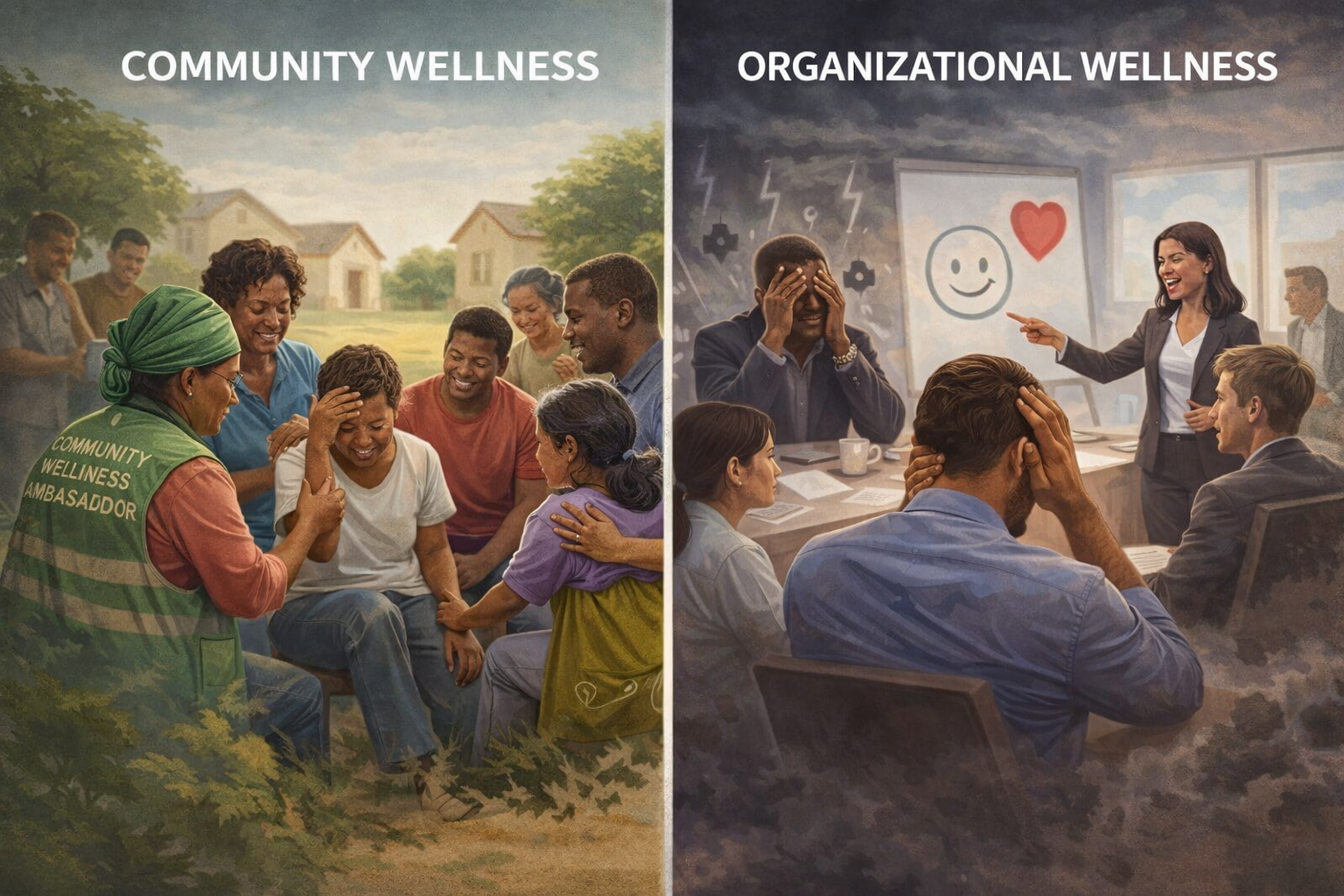
One potential way to strengthen community wellness is through the development of community wellness ambassadors.
These ambassadors could be individuals trained within communities to facilitate conversations about emotional wellbeing, relationships, conflict resolution, and personal healing. Their role would be to create safe spaces for dialogue and encourage healthier ways of processing personal experiences.
Too often, individuals who carry emotional pain release it through harmful behaviours or through platforms that deepen conflict rather than resolve it.
Community wellness initiatives can instead promote constructive engagement, healing, and mutual support.
Through trained ambassadors, communities could begin to rebuild environments that:
- encourage openness rather than silence
- address pain rather than suppress it
- support healing and personal growth
- promote collective responsibility for wellbeing
From Community Healing to Institutional Health
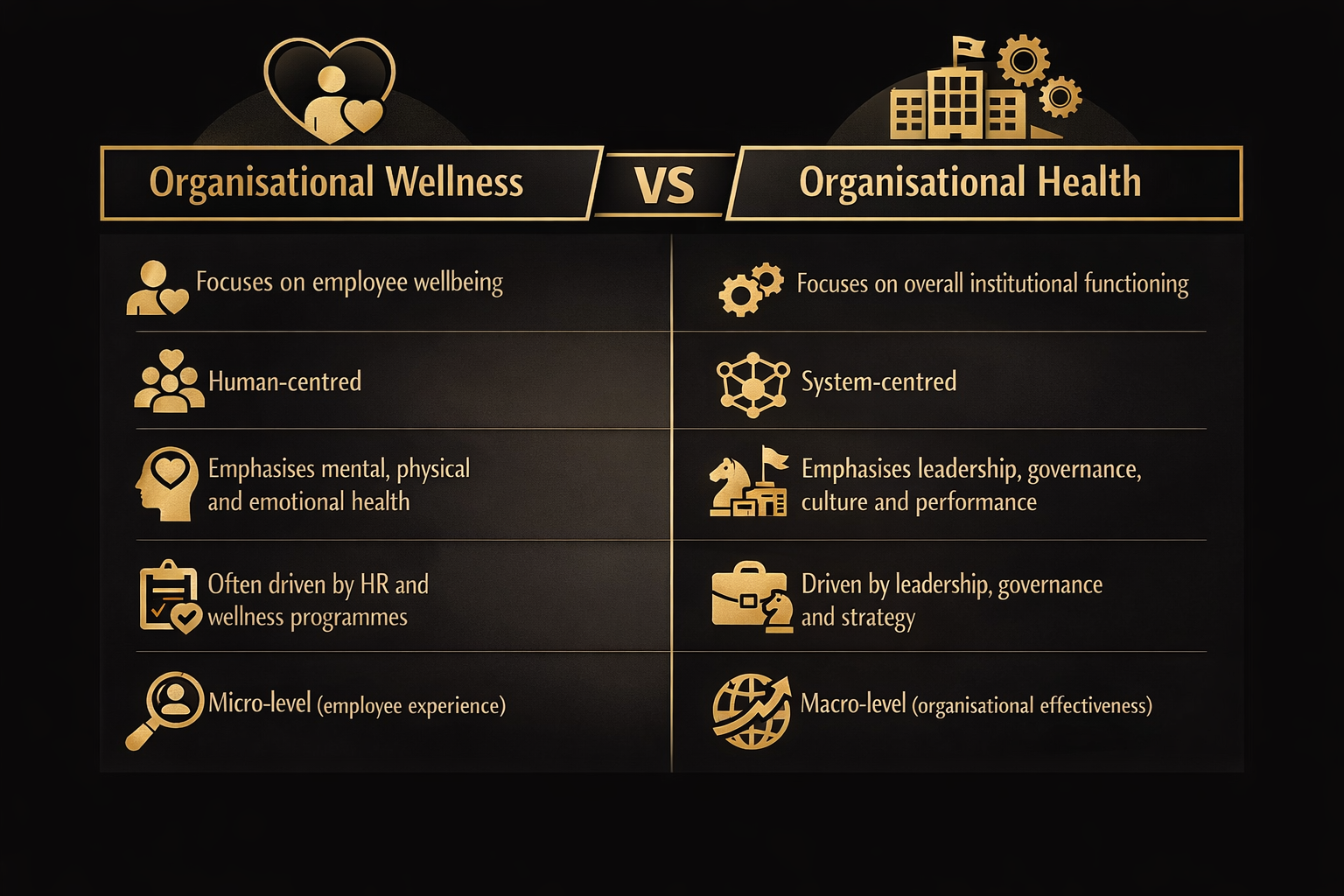
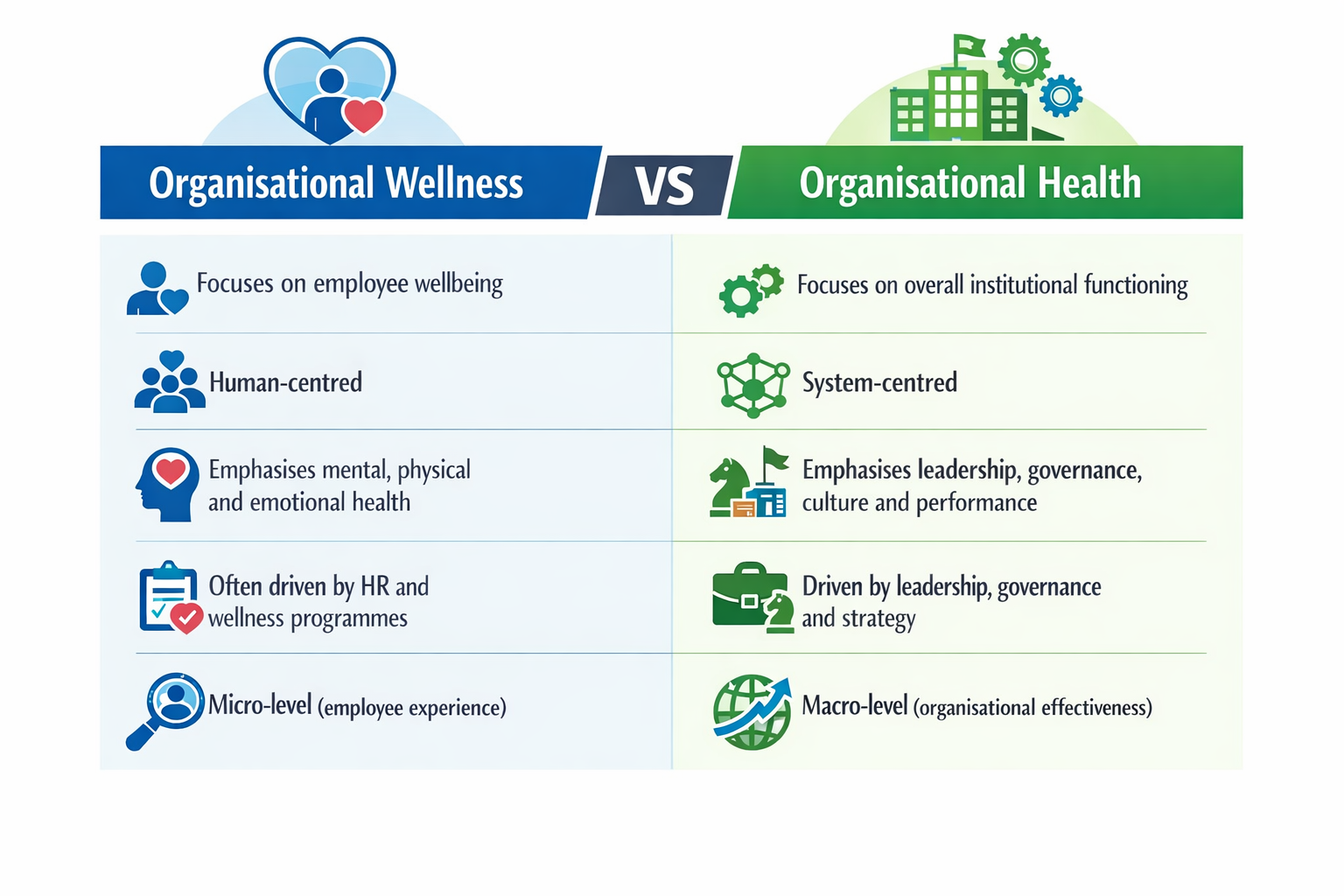
Organisational wellness and community wellness are deeply interconnected.
Healthy institutions cannot be built solely through policies and regulations. They depend on individuals who are emotionally grounded, socially aware, and capable of engaging respectfully with others.
By investing in community wellness, societies lay the foundation for healthier workplaces, stronger institutions, and more compassionate leadership.
In many ways, the long-term wellbeing of organisations may depend less on internal workplace programmes and more on the health of the communities from which their people come.
References
Bandura, A. (1977). Social Learning Theory. Englewood Cliffs, NJ: Prentice Hall.
Department of Social Development. (1997). White Paper for Social Welfare. Pretoria: Government of South Africa.
Marmot, M. (2015). The Health Gap: The Challenge of an Unequal World. London: Bloomsbury.
National Planning Commission. (2012). National Development Plan 2030: Our Future – Make It Work. Pretoria: Government of South Africa.
Putnam, R. D. (2000). Bowling Alone: The Collapse and Revival of American Community. New York: Simon & Schuster.
World Health Organization. (1948). Constitution of the World Health Organization. Geneva: WHO.
World Health Organization. (2008). Closing the Gap in a Generation: Health Equity Through Action on the Social Determinants of Health. Geneva: WHO